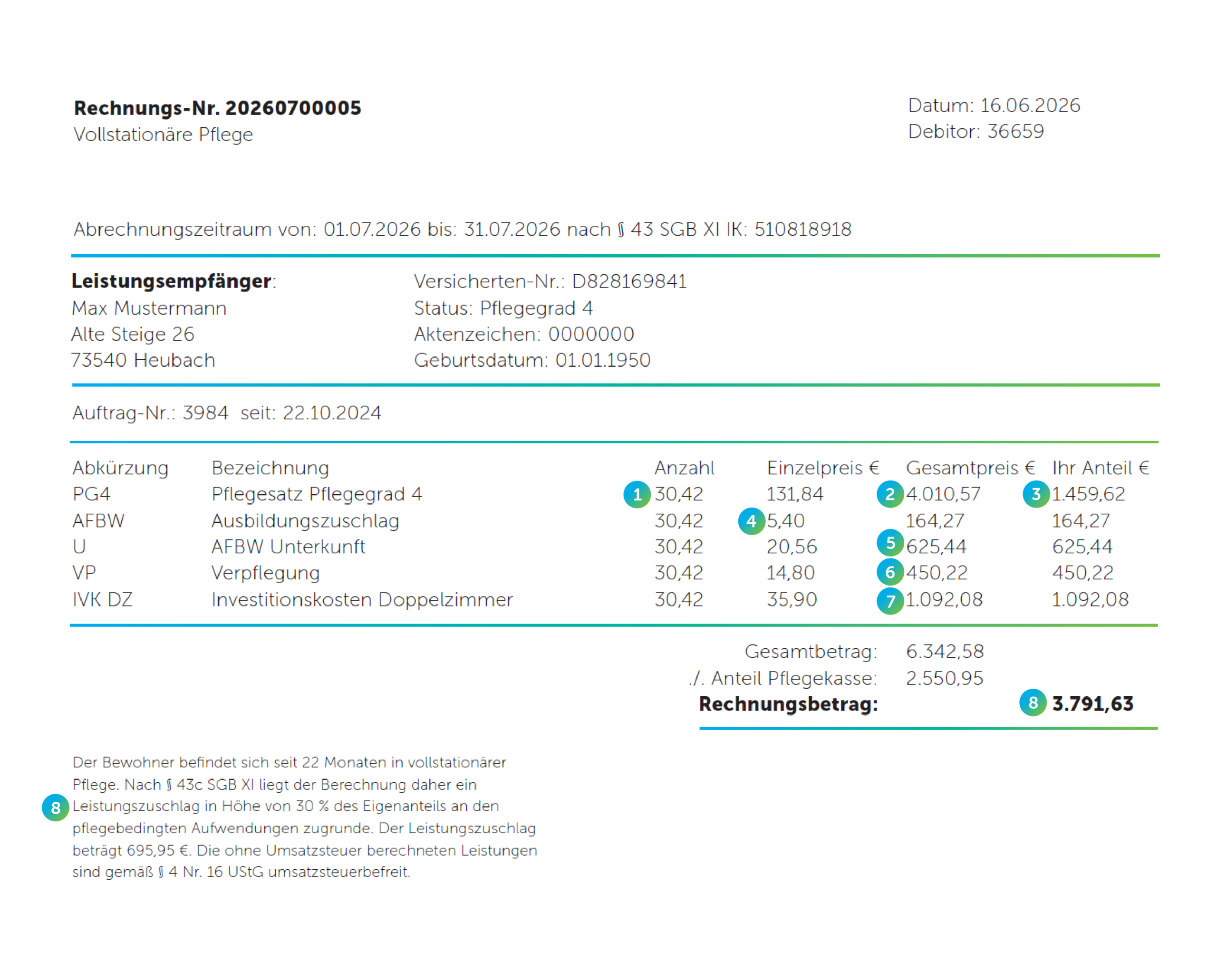
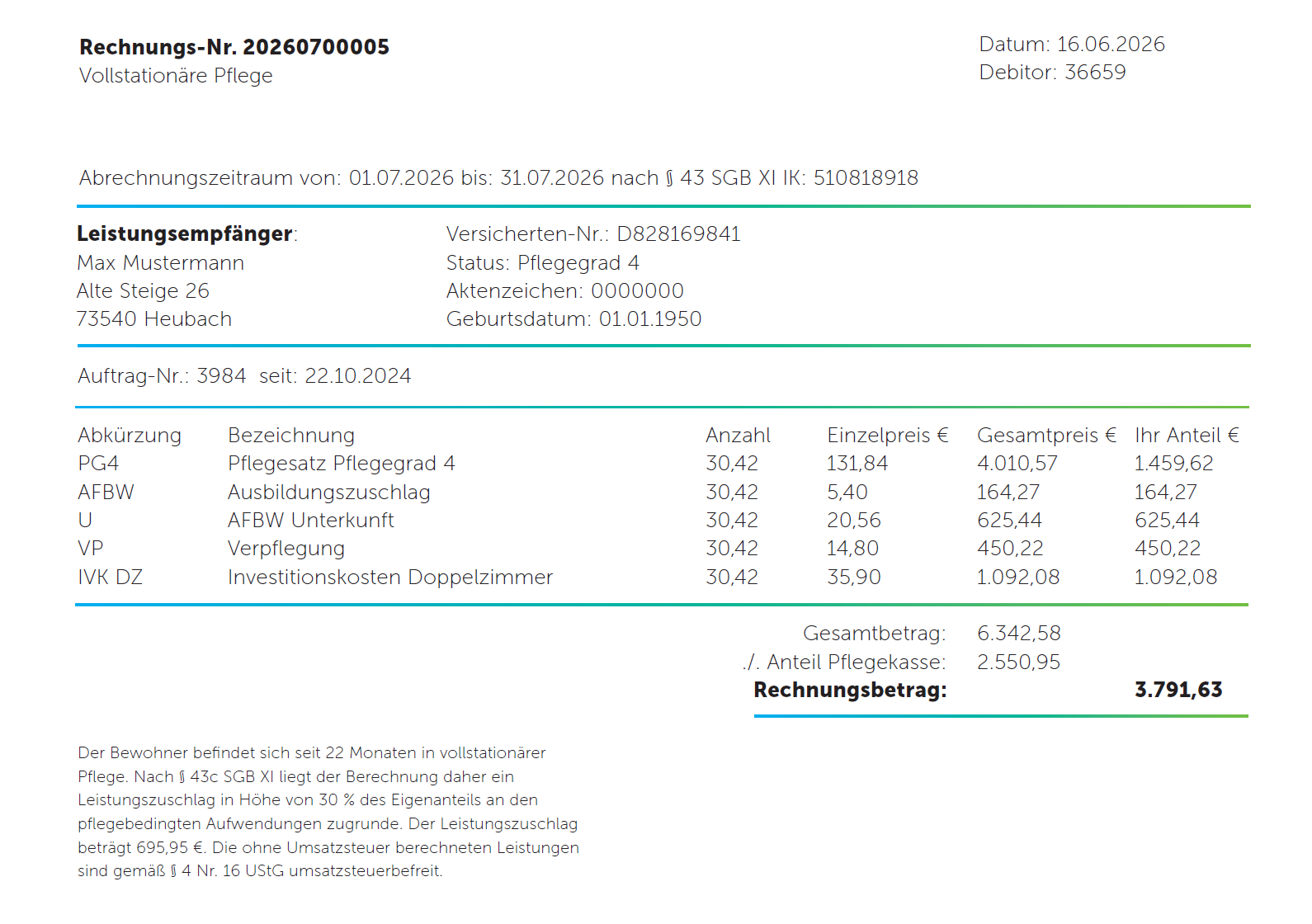
(1) Each month is calculated using a fixed average of 30.42 calendar days. This calculation method is established by law.
(2) How is the total amount calculated?
The total is calculated using the daily care rate, multiplied by an average of 30.42 days per month.
How is the daily care rate determined?
The daily care rate depends on the resident's care grade (Pflegegrad). The Medical Service (Medizinischer Dienst) recommends a care grade, which is then determined by the long-term care insurance fund. As a general rule, a higher care grade means a higher daily care rate.
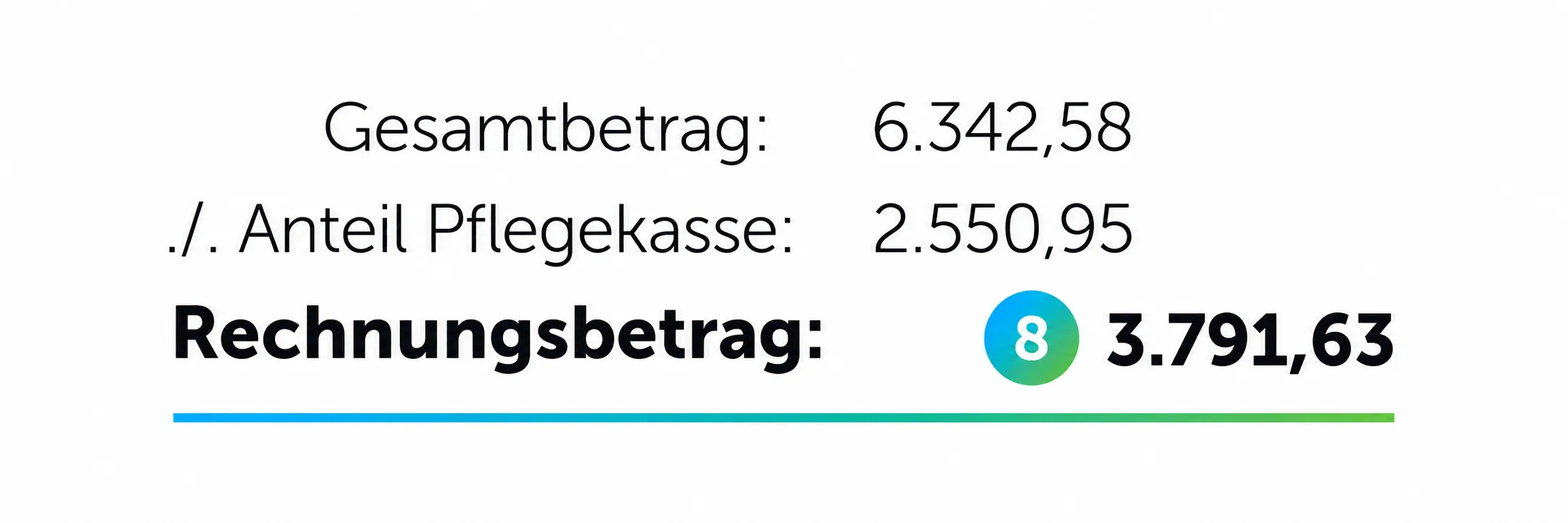
(3) The resident's share of costs is calculated by subtracting the amount paid directly to the care facility by the long-term care insurance fund from the cost of care. The amount covered by insurance depends on the resident's assigned care grade.
(4) Nursing education surcharge (AFBW):
Under German law, every resident is required to pay a nursing education surcharge. This contribution is used exclusively to finance the training of qualified nursing professionals.
In Baden-Württemberg, the surcharge is collected by the central agency AFBW. The amount is determined annually by the state government.
(5) Accommodation costs include utilities, room cleaning, laundry services (including residents' personal laundry), and the maintenance and upkeep of technical systems and outdoor areas. They also cover general housekeeping services.
(6) Meal costs include food expenses as well as staffing costs for the kitchen and meal service.
(7) Investment costs (monthly rent component) include the building's construction costs, spread over a 33-year depreciation period, interest on borrowed capital, legally capped equity capital costs (1.5% per year), maintenance costs (0.8% of construction costs per year), and the cost of furniture and other furnishings.
(8) Resident's share of care costs (EEE):
This is the portion of care-related costs that residents must pay themselves after benefits from their long-term care insurance fund have been taken into account.
The total amount payable is reduced by statutory supplemental benefits from the long-term care insurance fund. These benefits increase with the length of a resident's stay in a care facility.
In simplified terms:
Care-related costs − amount covered by the long-term care insurance fund + investment costs (see 7) = resident's care-related contribution (invoice amount).